
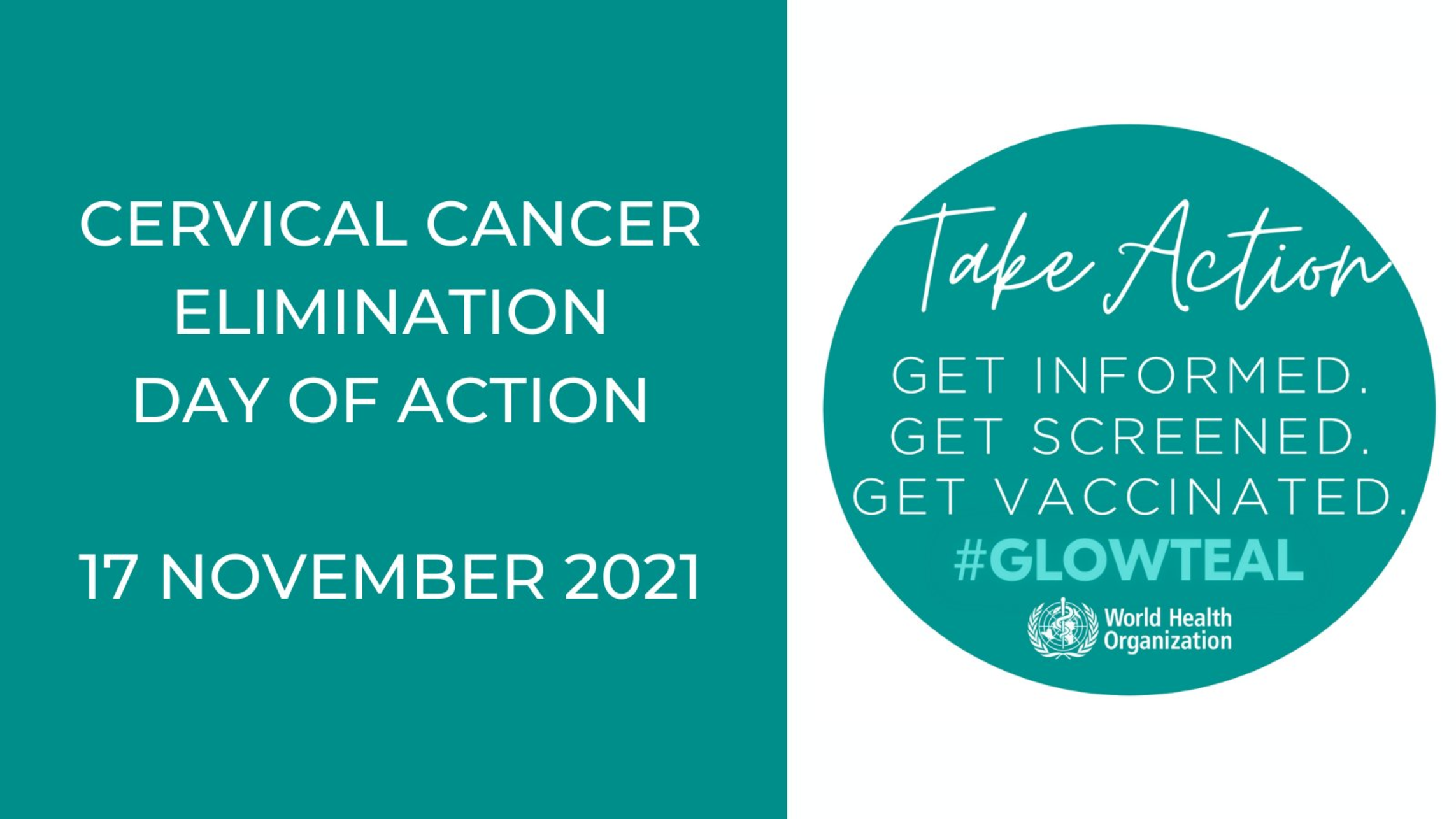
Cervical Cancer Elimination Day of Action 2022
The 17th of November 2022 marked two years since the world came together for a global day of action toward eliminating cervical cancer. Worldwide leaders, survivors, advocates, partners, and stakeholders called for action to eliminate cervical cancer through dialogue. Together, we shared stories and educational resources to screen, prevent, treat and ultimately eliminate cervical cancer
In 2020, the World Health Organization (WHO) launched the Global Strategy to Accelerate the Elimination of Cervical Cancer by 2030. The 3 pillars of this plan involve:
- Prevention through vaccination. HPV vaccination offers long-term protection against cervical cancer.
- Screening and treatment of precancerous lesions can prevent pre-cancer from developing into cancer.
- Timely treatment and palliative care for invasive cervical cancer can save lives and palliative care can greatly reduce pain and suffering.
The WHO developed a 90-70-90 plan to achieve these goals:
- 90% of women identified with cervical disease receive treatment
- 70% of women are screened with a high-performance test by 35 years of age and again by 45 years of age
- 90% of girls fully vaccinated with HPV vaccine by 15 years of age
Vaccination will play an especially vital role in achieving this goal of ending cervical cancer: the HPV Vaccine can prevent up to 90% of all cervical cancer cases, and it is an important intervention in lower-income countries, where the global burden of HPV-related cervical cancer is high.
The WHO 2030 Global strategy to accelerate the elimination of cervical cancer has set a target of fully vaccinating 90% of girls with the HPV vaccine by age 15. However, in 2021, global HPV coverage stood at 12%. The COVID-19 pandemic affected performance of HPV programs through school closures, delayed vaccination rounds but also product stockouts. Recent data highlights a downward trend in HPV vaccine coverage in 2021 – and it’s been down by 15% or more since 2019 (one dose). Improving HPV coverage will be a key focus in 2023.
Urgent action is required to improve HPV vaccine coverage and vaccinate missed cohorts of girls. This year’s #CervicalCancer Elimination Day of Action was a critical moment to continue building awareness of HPV vaccination, shed a light on the progress made, and the power of the vaccine to protect lives and positively impact gender equity.
We encourage you to read and widely share the #VaccinesWork stories below, which highlight how countries have introduced and expanded access to the vaccine in communities, despite challenges:
- In Uzbekistan 94% of girls between 12-14 have received 1 dose of the HPV vaccine Uzbekistan’s girls are taking on HPV [Tweet]
- Sierra Leone recently introduced the HPV vaccine into Routine Immunisation. Here’s what it means: “A pivotal moment”: Sierra Leone makes HPV vaccine available to girls across country [Tweet]
- Storytelling is helping girls access the HPV vaccine in Ethiopia and Tanzania
- Lesotho mothers welcomed the reintroduction of HPV vaccine
- HPV vaccine rolls out in Eswatini
For broader educational and awareness building, here is a simple explainer on why girls should get the HPV vaccine and here you can look back at 15 years of the HPV vaccine in 5 charts [Tweet]. Here you can read an article on how community-based solutions can reverse the backslide in routine immunizations, including HPV.
Please use the hashtag #CervicalCancer in your social posts.