
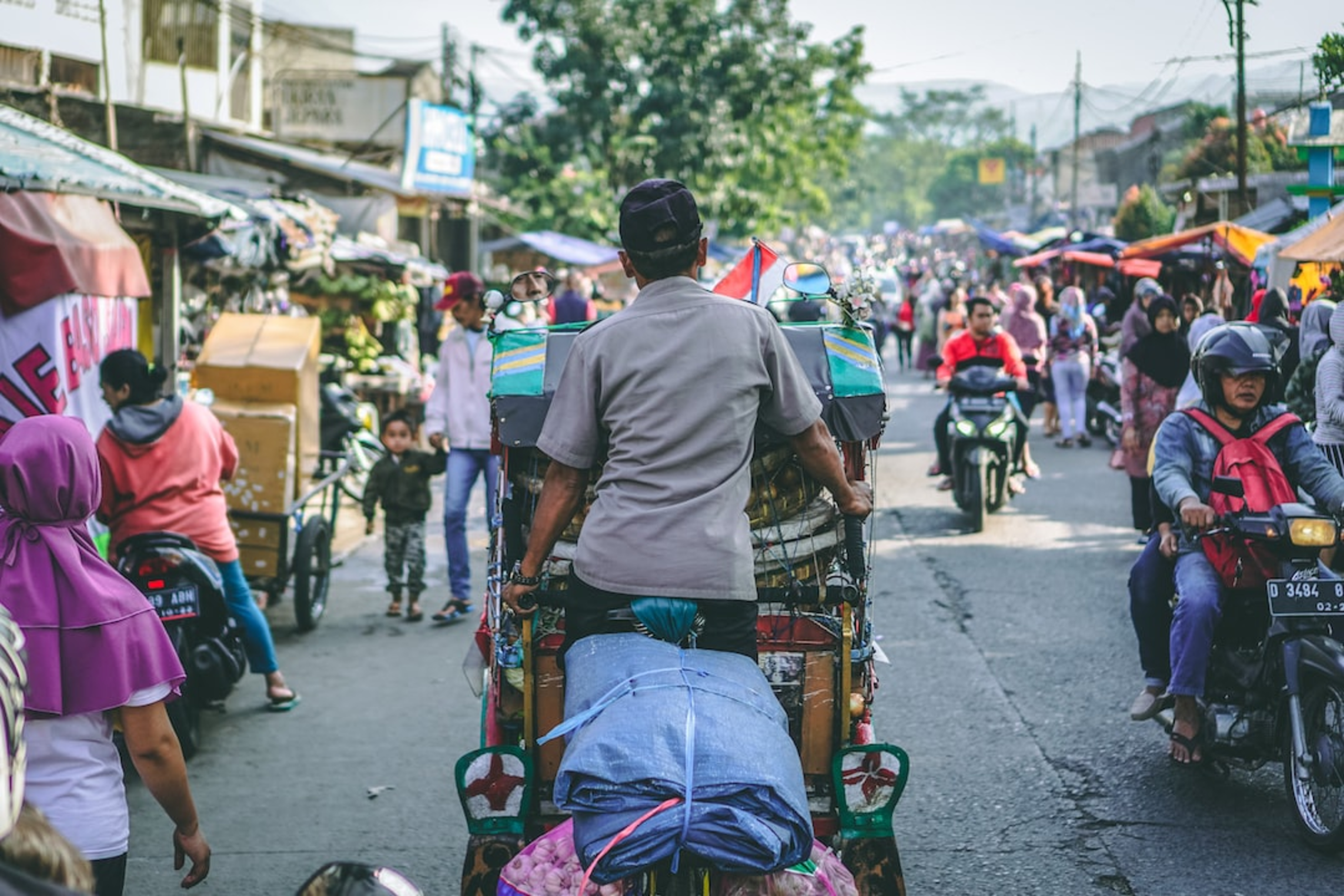
Exploring Patterns of Non-Participation Across Multiple Health Campaigns: A Qualitative Study in Ghana and Indonesia
A research team at the University of Ottawa and Bruyère Research Institute conducted a qualitative study in Ghana and Indonesia to understand why some community members in these countries do not participate in public health campaigns. This research came in response to the COVID-19 pandemic, which disrupted public health campaigns and shone a light on disparities in access to health services and in health outcomes across and within nations. There is now a push to focus on individuals who do not participate in public health campaigns, especially for neglected tropical diseases (NTDs) and children who have not been immunized (zero-dose). Identifying community members who do not participate in health campaigns is a difficult but essential task because high proportions of these individuals increase the risk of infection for the entire community and contribute substantially to the spread of disease.
The objectives of this study were to:
- Identify patterns of acceptability, availability, and community awareness and hesitancy across multiple public health campaigns (NTDs; malaria; childhood immunizations; and COVID-19 measures, including vaccines)
- Explore reasons for non-participation across multiple public health campaigns
- Provide insights to ministries of health and regional health bodies to inform programmatic actions for addressing non-participation
Through on-the-ground investigations, researchers explored the reasons for non-participation in health campaigns, especially for childhood immunization and COVID-19 vaccination. They found that although reasons may vary by specific campaign at the individual level, rationale for non-participation is similar across campaigns.
These reasonings fit into four categories:
- Health system-related reasons (e.g., low vaccine availability)
- Intervention-related reasons (e.g., fear of receiving injections)
- Personal reasons (e.g., religous or cultural beliefs)
- Biological reasons (e.g., pregnancy or comorbidity)
Importantly as well, individuals often noted multiple reasons for refusal to participate in a health campaign. Rumors that spread throughout communities led to mistrust in health campaigns and thus depressed participation. Another commonly cited factor for non-participation was a prior negative experience with a healthcare worker. Health literacy was generally low among non-participants, but knowledge about an intervention's benefits did not necessarily increase participation. Finally, gender roles and expectations influenced participation in health campaigns: men often chose whether or not the family would participate in the health campaign, while women were in charge of coordination of participation.
The researchers noted some important next steps to take in response to their findings, including: walking through areas with high levels of non-participation to identify missed households and converse with community members on the reasoning behind their non-participation; train and incentivize community health workers to identify non-participating households; encourage the verification of community members' vaccination history through immunization cards and household registers.
Read more and view the accompanying slides
What did you find most surprising in this research? Have you had similar experiences with non-participation in health campaigns in your contexts? In your context, what are community members' reasoning for non-participation in health campaigns? Where do you see room for further research when investigating non-participation in health campaigns?
Share your thoughts in the "Comment" section below!